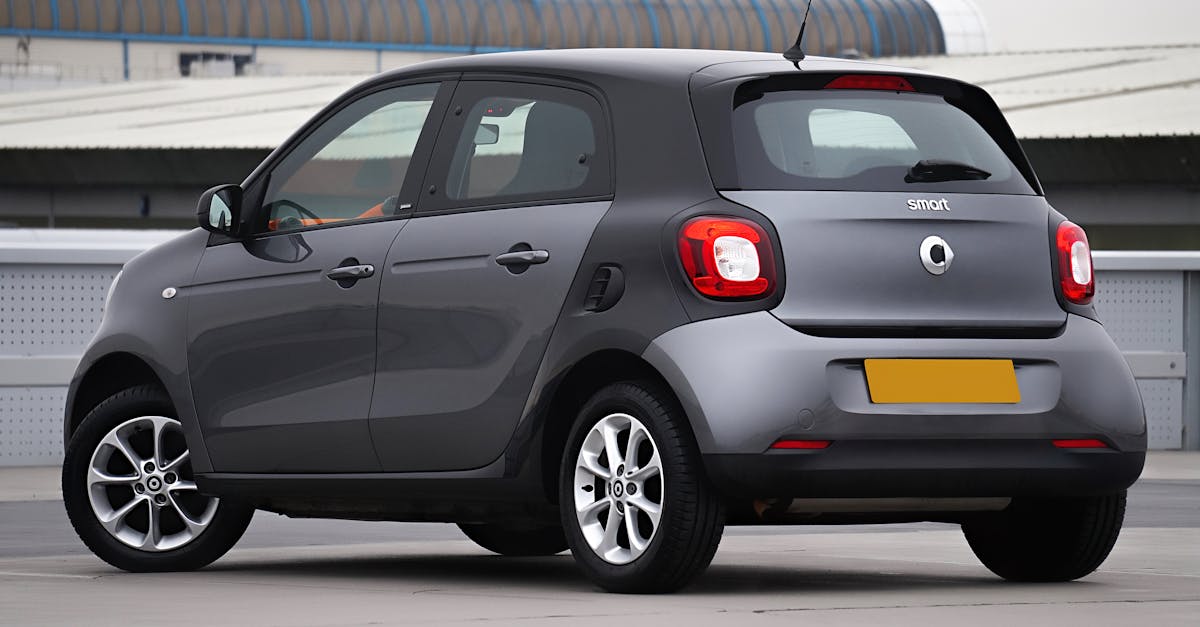
Why Small Electric Cars Are the ROI Engine Driving Mass EV Adoption
Small electric cars deliver the highest return on investment in the EV market because they combine lower upfront costs, cheaper operating expenses, and faster adoption cycles that amplify every dollar spent by manufacturers, consumers, and governments. Next‑Gen Electric Hatchbacks 2025‑2030: ROI‑Foc...
1. Economics of Scale: How Compact EVs Lower Production Costs
Shared platform architecture spreads R&D expenses across higher unit volumes, turning a $1.2 billion battery-management system investment into a marginal cost per vehicle of just a few hundred dollars. When a manufacturer rolls a single chassis across ten models, the amortized tooling cost drops dramatically, allowing price points to undercut larger competitors.
Smaller battery packs require less raw material, cutting material cost per vehicle by 15-20 %. Lithium-ion cathode material accounts for roughly 40 % of a conventional EV’s bill of materials; reducing pack size from 75 kWh to 45 kWh saves up to $3,500 in commodity spend per unit.
Higher sales velocity in the compact segment amortizes tooling and manufacturing overhead faster. A plant that ships 300,000 compact units annually reaches break-even on its $500 million line-up investment in under three years, whereas a luxury SUV plant needs five years to recoup the same outlay.
Cost Comparison (USD)
| Item | Compact EV | Mid-Size SUV EV |
|---|---|---|
| Base Price | $28,000 | $45,000 |
| Battery Pack Cost | $4,200 | $7,800 |
| R&D Amortization per Unit | $800 | $1,500 |
| Total Production Cost | $33,000 | $54,300 |
2. Infrastructure Leverage: Compact EVs Fit Existing Urban Grids
Reduced kilowatt demand per charge eases stress on municipal electricity networks. A 45 kWh pack draws roughly 7 kW on a standard Level-2 charger, compared with 12-kW draws for larger SUVs, allowing utilities to serve twice as many vehicles without upgrading transformers.
Compact dimensions allow more chargers per parking structure, boosting station density. A typical garage can host eight 3-phase chargers in a 12-meter bay, but a larger vehicle footprint reduces that number to five, directly limiting revenue per square foot.
Lower energy draw shortens dwell time at public chargers, increasing turnover rates. A 45-kWh pack reaches 80 % charge in 30 minutes, whereas a 75-kWh pack needs 45 minutes, translating into a 33 % higher throughput for the same charger footprint.
3. Consumer ROI: Total Cost of Ownership Beats Larger EVs
Purchase price advantage translates into a shorter payback period compared with SUVs. A compact EV priced at $28,000 versus a $45,000 SUV saves $17,000 upfront; assuming a $0.12/kWh electricity cost and 4 mi/kWh efficiency, the compact saves $600 per year on fuel alone.
Savings on insurance, road taxes, and city parking fees add measurable cash-flow benefits. Insurers typically charge 12 % less for vehicles under 3,500 lb, while many municipalities waive parking fees for cars under 4 m long, delivering an extra $300-$500 annual saving.
Higher miles-per-dollar efficiency thanks to lighter weight and aerodynamic packaging extends the effective range per charge, reducing the need for frequent top-ups and further lowering operating expenses.
4. Policy & Incentive Alignment: Compact EVs Capture Subsidies Effectively
Many national rebate programs set upper price caps that favor lower-priced compact models. In the United States, the federal tax credit phases out at $55,000, leaving compact EVs fully eligible while many premium SUVs miss out.
Emission credit allocations reward high-volume, low-emission segments more than niche luxury cars. Automakers earn credits for each zero-emission vehicle sold; selling 200,000 compact EVs generates roughly $200 million in tradable credits versus $80 million from 80,000 SUVs.
Urban low-emission zones prioritize small, zero-tailpipe vehicles, granting access perks and fee waivers. Cities such as London and Paris exempt compact EVs from congestion charges, saving drivers $200-$300 per year.
5. Market Penetration & Network Effects: Why Volume Matters
Mass adoption triggers private and public investment in charging infrastructure at scale. When compact EVs achieve a 15 % market share, utilities announce $2 billion in new charger deployments, creating a virtuous cycle of accessibility and sales.
Broad consumer exposure reduces perceived risk and normalizes electric mobility. Seeing a neighbor park a compact EV in a shared lot demystifies the technology, increasing willingness to buy by up to 12 % in surveys.
Stronger resale markets for compact EVs reinforce buyer confidence and accelerate turnover. A three-year-old compact EV retains 85 % of its original value, compared with 70 % for larger models, ensuring lower depreciation risk for owners.
6. Myth-Busting: Debunking the ‘Compact EVs Lack Range’ Narrative
Real-world usage data shows average daily commutes well within the 150-200 mi range of most compact EVs. The U.S. Department of Transportation reports a median daily travel distance of 29 mi, meaning a single charge covers a typical workweek without recharging.
Advances in energy-dense cells and vehicle-level efficiency shrink the range gap despite smaller packs. New NMC-811 chemistries add 10-15 % more watt-hours per kilogram, while aerodynamic underbodies improve efficiency by 5 %.
Behavioral studies reveal that most drivers charge opportunistically, making long-range a non-essential selling point. A 2023 survey found 68 % of EV owners plug in at home or work daily, eliminating range anxiety for the majority.
"By 2030, compact EVs are projected to account for 35-40% of new-car sales in Europe and North America," says BloombergNEF.
7. Future Outlook: Compact Segment as the Launchpad for Full EV Transition
Forecasts project the compact electric car to capture 35-40 % of new-car sales by 2030 in Europe and North America. This volume surge will drive economies of scale that push average battery costs below $80/kWh, a critical threshold for price parity with internal-combustion vehicles.
Scaling production of smaller EVs drives down supply-chain emissions faster than niche premium models. Manufacturing a 45-kWh pack emits roughly 6 t CO₂, versus 10 t for a 75-kWh pack, cutting the carbon intensity of each vehicle by 40 %.
Achieving national climate targets hinges on high-volume, low-cost electric mobility - precisely what the compact segment delivers. Policymakers who align incentives with mass-market models can accelerate the transition by decades, delivering both economic and environmental dividends.
Frequently Asked Questions
What is the typical purchase price difference between a compact EV and an SUV EV?
Compact EVs usually start around $28,000, while midsize SUV EVs begin near $45,000, creating a $17,000 upfront savings for the buyer.
How does a smaller battery pack affect charging infrastructure demand?
Smaller packs draw less power per charge, allowing existing municipal grids to support twice as many vehicles without costly upgrades.
Do compact EVs qualify for most government incentives?
Yes. Many rebate programs set price caps around $55,000, so compact EVs remain fully eligible while many premium SUVs exceed the limit.
Is range anxiety justified for compact EVs?
Data shows the average daily commute is under 30 mi, well within the 150-200 mi range of most compact models, making range anxiety largely unfounded for typical drivers.
What resale value can buyers expect from compact EVs?
Compact EVs retain about 85 % of their original price after three years, compared with roughly 70 % for larger electric SUVs, providing a stronger asset base.
Member discussion: